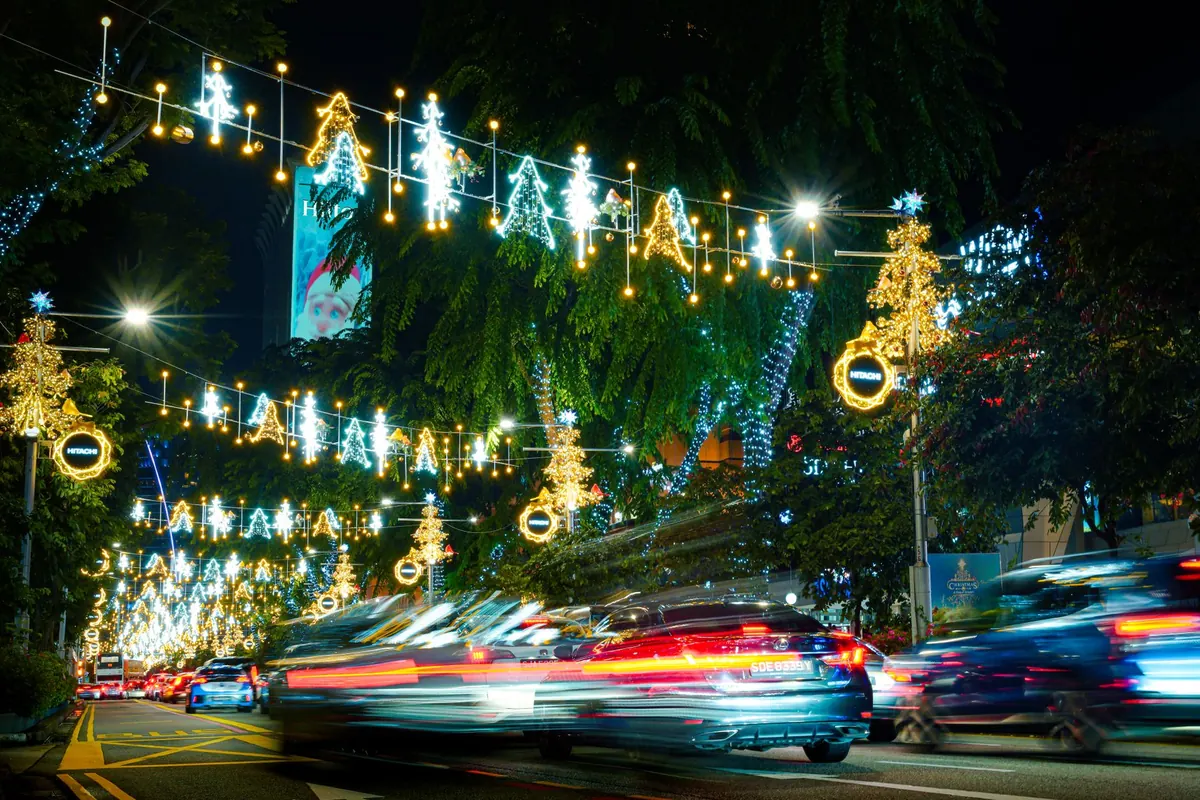
Every year the same thing happens. One town switches on its lights, photographs fill the local Facebook groups, and by the following morning everyone else is asking when their own high street gets its turn. Switch-on evenings are the friendliest nights of the winter: a school choir on a temporary stage, steam curling off a burger van, children on shoulders counting down from ten.
The 2026 dates will be confirmed by town and community councils through the autumn, and the pattern is predictable enough to plan around. What follows is what usually happens, how to get there without a fight over parking, and the small preparations that make the difference between a lovely evening and a cold argument in a car park.
When the switch-ons usually fall
Most switch-ons land on a Friday, Saturday or Sunday between the last weekend of November and the second weekend of December. School choirs can only sing in term time, so early December is the favourite. Saturdays draw the biggest crowds. Thursday evenings catch people on the way home from work and tend to be easier with a pushchair.
Village events often come first. A community council working with a smaller budget will usually choose a Friday, run a shorter countdown, and book a Santa who arrives on a tractor rather than a sleigh. The larger towns hold out for a Saturday with a funfair, a stage and fireworks.
Once the announcements start appearing, these are the places worth checking:
- Your town or community council's website and social media — normally the first place a date appears
- The county council's events and road closures pages, which list the closure orders that come with a large switch-on
- Chambers of trade and high street business groups, who often part-fund the evening
- The venue itself, if the switch-on is happening in a park, a retail park or a garden centre
- Shop windows and parish noticeboards — old-fashioned, still reliable
Two cautions. Don't trust a screenshot of last year's poster; most events keep the same weekend, but not all, and a date that moves can clash with a neighbouring town's. And check again in the week before you go. High winds have cancelled the fireworks half of more than one switch-on, and some organisers move the countdown indoors at short notice.
What happens on the night
A typical switch-on runs from late afternoon until early evening. Stalls open first, then a lantern or torchlit parade works its way to the main square, followed by choirs and a brass band while everyone waits for the countdown. The lights go on somewhere between half six and seven in most towns, with fireworks afterwards if they are part of the programme. Timings vary, so treat any schedule you see as a guide rather than a promise.
If you want to be near the front for the countdown, arrive 30 to 45 minutes beforehand. If you want to be able to leave without being carried along by the crowd, stand at the edges rather than the middle, and pick your exit before the lights go on. Independent shops often stay open late, which is a good reason to arrive early and do a bit of Christmas shopping before the crush builds.
Getting there
By train
Several Vale towns have a station within a short walk of the high street, which makes the train the easiest option on the busiest night of the year. Carriages will be full, so buy tickets in advance if you can and check the last service home — it is often earlier than people expect.
By bus
Operators frequently add extra services or divert routes around closed streets. Check the operator's website the day before, and again on the day.
By car
High streets usually close to traffic from mid-afternoon. Any car left on the route risks being moved, so shift it well before the closure begins — early afternoon is a sensible deadline. Use the designated car parks, and the park-and-ride scheme if one is running. Verges, double yellow lines and shop forecourts all attract enforcement on switch-on night, and a penalty notice is a poor end to a nice evening.
On foot or by bike
If you live within a mile or two, walking is genuinely the fastest way home afterwards. Cyclists should bring a proper lock and lights; racks fill up quickly and a bike left against a railing is a temptation.
Accessibility and sensory considerations
Crowds on a closed high street are tight, and kerbs, cable covers and temporary barriers can make a step-free route harder than it looks. If you use a wheelchair, a mobility scooter or a pushchair, plan your approach along a side street and aim to arrive before the main rush.
- Blue badge parking. Spaces near the event fill by mid-afternoon. If you need one, arrive early or ask the organiser whether any additional bays are being reserved.
- Quiet space. Some organisers provide a calm room or a designated quiet area. Ask in advance — if there isn't one, plan your own retreat to a café, library or church hall.
- Noise. Public address systems and fireworks are loud and sudden. Ear defenders help children and adults alike.
- Toilets. Check what is open and whether there are accessible facilities nearby. Cafés generally expect you to buy something.
- Assistance dogs. Welcome, but the crowds are tight. A word with a steward on arrival usually helps.
If you have specific questions, ring or email the organiser a week or two ahead. Councils and volunteers are usually pleased to be asked and can tell you exactly where the drop kerbs, the accessible toilets and the best viewing spots are.
Practicalities for families
- Dress for standing still, not walking. Thermals, hats, gloves and waterproof boots. Pavements get greasy underfoot.
- Take a small amount of cash and a card. Stalls vary, and the queue at the one cash machine in town will be long.
- Pack a flask and a snack. Food queues peak just before the countdown.
- Charge your phone and agree a meeting point in advance, ideally something unmistakable rather than "by the stage".
- Write your mobile number on a wristband or your child's hand if they are likely to wander.
- Decide whether you are staying to the end. Leaving ten minutes before the finale avoids the worst of the crush, and small children rarely notice.
Quieter alternatives
If the main event feels like too much, there are gentler options. Village switch-ons are smaller and often held on a different evening. Churches run carol services through December, garden centres and farm shops hold their own light-ups, and some towns put on an illuminated window trail that lasts for weeks with no fixed start time. Late-night shopping evenings give you the lights, the shops and a fraction of the crowd.
Before you set off
Run through this list on the day itself, and you will avoid most of the things that spoil switch-on evenings.
- Confirm the date, start time and countdown time on the organiser's own page
- Check road closures and move the car early if you need it nearby
- Check the last train and bus home
- Ask about accessibility, toilets and any quiet space
- Agree a meeting point and a leaving time with everyone in your group
- Charge phones, take cash and dress for the cold
Wrap up warm, get there a little early, and enjoy it. The lights are only part of the evening — most people remember the walk home and the chips on the way.
Photo: YIYANG LIU / Pexels